

Experienced & Committed
Experienced legal representation for criminal defense, DWI, traffic violations, and small claims in Charlotte, NC.
proud
Member of:


EXPERIENCED CRIMINAL DEFENSE
We protect your rights from start to finish.
DWI DEFENSE STRATEGY
We examine every detail to pursue the best possible outcome.
TRAFFIC VIOLATION REPRESENTATION
we help you understand your legal options and next steps.
RELENTLESS ADVOCACY
while remaining committed to defending your case to the very end.
We Understand Your Legal Needs
If you’re looking for an attorney who will take the time to understand your situation and advocate for you without compromise, you’re in the right place. We provide experienced representation for criminal defense, DWI, traffic violations, and small claims in Charlotte, NC.
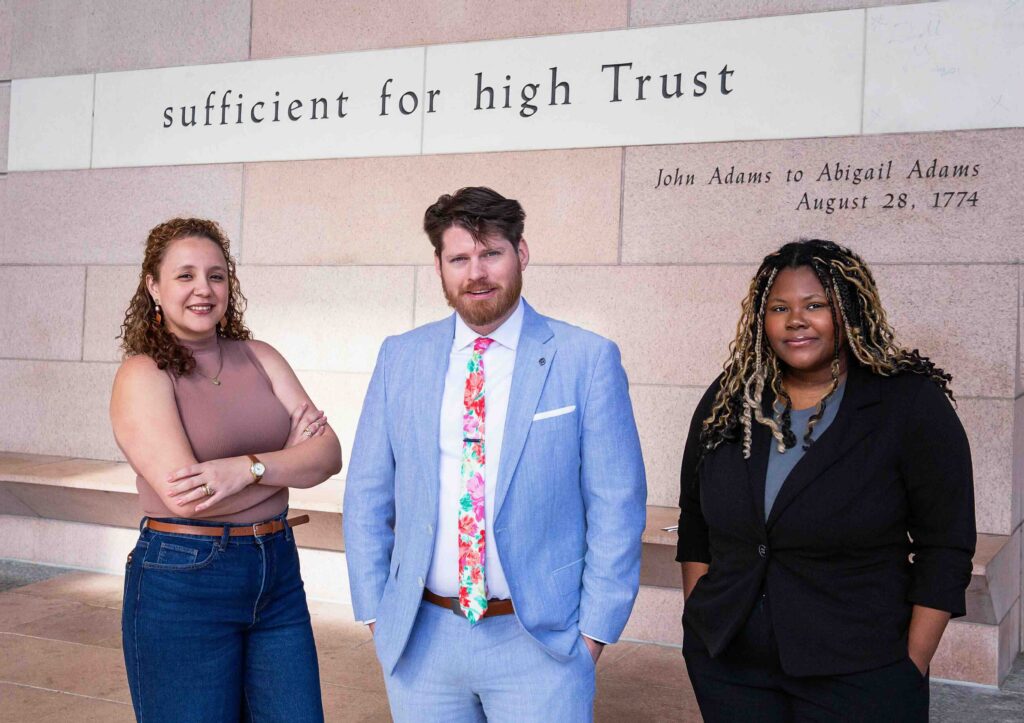
The Metz Law Firm
DWI is a Nightmare. We help you wake up.
www.keithmetzlaw.com
What We Can Help You With
Criminal Defense
Our purpose is to provide expert and personalized legal counsel to those accused of a criminal offense.
(Driving While Impaired)
Keith Metz Law has extensive experience handling DWI cases and understands the nuances of North Carolina law.
Traffic Violations
Although most traffic citations are considered minor violations, certain cases such as reckless driving and DWIs can be complicated and have serious consequences.
Small Claims
What is small claims court? Small claims court is a division of the court designed for North Carolina state court system.



What Our Clients Are Saying About Keith Metz law
Trustindex verifies that the original source of the review is Google. Great lawyer. Great staff. Very communicative and will have your case resolved in a timely manner. Affordable if you need to fight a ticket or moving violation.Trustindex verifies that the original source of the review is Google. Keith Metz was incredibly professional, responsive, and supportive throughout my DWI case. He made a very stressful process feel manageable by clearly walking me through every step and making sure I understood my options. I truly appreciated his hard work, dedication, and steady guidance from start to finish. While the outcome wasn’t exactly what I had hoped for because of uncontrollable circumstances, I’m grateful to have had an attorney who passionately advocated for me and helped ensure things didn’t turn out worse. I highly recommend Keith to anyone looking for knowledgeable and committed legal representation for their DWI case.Trustindex verifies that the original source of the review is Google. Mr. Metz has helped me with multiple tickets and has been able to get every single one reduced . He is the best and worth every cent .Trustindex verifies that the original source of the review is Google. Realmente muy satisfecho con su trabajo, estoy muy agradecido con su apoyo.Trustindex verifies that the original source of the review is Google. Considero que el servicio recibido por parte de The Metz Law fue excelente, muy claro y preciso lo que facilitó el logro de los objetivos trazados de forma.exitosaTrustindex verifies that the original source of the review is Google. Highly recommended !Trustindex verifies that the original source of the review is Google. Excellent service 10/10 highly recommendTrustindex verifies that the original source of the review is Google. I heard about Keith Metz's law office through Soy, who is their Sales representative, and since I already knew them, I wouldn't consider any other office to handle a traffic ticket in North Carolina.
Frequently Asked Questions
Common questions about criminal defense, DWI, and traffic violations in Charlotte, NC.
Have more questions? Visit our full FAQ page for detailed answers and additional information.
Can I get my speeding ticket dismissed if the officer’s RADAR or LIDAR was inaccurate?
Not necessarily. While problems with an officer’s RADAR or LIDAR can sometimes strengthen your defense, they do not automatically result in a dismissal. Speeding cases in North Carolina are not based solely on the device reading—officers can also testify to their visual estimation of your speed, backed by their training and experience.
For example, if an officer testifies that they visually estimated your speed at 80 mph and their RADAR showed you at 85 mph, even if the RADAR reading is thrown out, the State can still rely on the officer’s 80 mph visual estimate. Unfortunately, there is no scientific way to “disprove” an officer’s estimation because it is considered an opinion formed through training and observation.
Can my case be continued?
Yes. Traffic cases in North Carolina are continued all the time. In fact, continuances are extremely common and are often necessary for:
Negotiating with the District Attorney
Obtaining your driving record
Securing a reduction or dismissal
Waiting for documents or proof of compliance (registration, insurance, inspection, etc.)
Scheduling conflicts with the officer, prosecutor, or court
A continuance does not harm your case, and it does not imply guilt or wrongdoing. It’s simply part of the court process and is used to ensure your attorney has the time needed to achieve the best possible outcome.
Will you charge me extra if my case needs to be continued?
No. I charge a flat fee for traffic cases. This means you will never pay more simply because your case requires one—or several—continuances.
Whether your case resolves in one court date or six, your fee does not change.
Continuances are a normal, strategic part of the process, and they do not increase your cost.
If my case needs to be continued, does that make me look bad to the DA or the judge?
Not at all. Continuances are routine, expected, and used by both sides—your attorney and the District Attorney. Judges and prosecutors see continuances in traffic court every single day, and they do not interpret them negatively.
Continuances are often done to:
Gather missing paperwork
Allow time for negotiations
Fix compliance issues
Wait for officer availability
Work toward a better reduction or dismissal
In many cases, continuing the case actually helps you, because it gives your attorney more time to negotiate a better outcome.
Can I go to jail for my speeding ticket?
For most speeding tickets in North Carolina, no—you are not going to jail. The vast majority of speeding offenses are treated as minor traffic infractions, and jail time is not part of the punishment.
However, there are a few rare situations where speeding can carry the possibility of jail, usually because the charge becomes a criminal misdemeanor, not just a traffic infraction.
You could face jail time if:
You are charged with Reckless Driving,
You are charged with Speeding to Elude Arrest,
Your speed is extremely high (generally over 90 mph),
Your speed is more than 25 mph over the limit and the officer charges it criminally,
You committed other criminal offenses along with speeding (DWLR, DWI, etc.), or
You have multiple prior convictions that elevate the charge.
Even in these situations, actual jail time is still uncommon, especially for first-time offenders. Courts typically allow alternatives such as:
Community service
Fines
Driving school
Probation
Safe driving courses
Will my DWI be dismissed?
A DWI can be dismissed, but it is not common. North Carolina has some of the strictest DWI laws in the country, and prosecutors are required by policy to aggressively pursue these cases. Dismissals usually occur only when there are serious legal or evidentiary problems that prevent the State from proving the charge beyond a reasonable doubt.
Some examples of issues that might lead to dismissal include:
An unlawful or unconstitutional traffic stop
Insufficient probable cause to arrest
Serious problems with the officer’s field sobriety tests
Improperly administered breath or blood testing
Instrument malfunction, calibration issues, or missing records
Significant chain of custody problems for blood samples
A violation of your statutory or constitutional rights
Even when these issues exist, prosecutors rarely dismiss DWIs voluntarily. Instead, the case usually requires:
A formal legal challenge,
Strategic negotiation, or
Preparation for trial.
What are the sentencing levels for DWI in North Carolina?
North Carolina uses a structured system of six sentencing levels for DWI offenses, ranging from Level 5 (least severe) to Aggravated Level 1 (most severe). Which level you fall into depends on the presence of grossly aggravating, aggravating, and mitigating factors in your case.
Here’s a simplified breakdown:
Aggravated Level 1 (A1)
–
Most Severe
Reserved for the most serious cases.
Occurs when:
There are three or more grossly aggravating factors, or
Two grossly aggravating factors, one of which is driving while license revoked (DWLR) for impaired driving.
Penalties:
120 days to 36 months in jail (active sentence)
Extremely high fines
Mandatory ignition interlock
No eligibility for a suspended sentence
Level 1
Occurs when:
There are two grossly aggravating factors, or
One grossly aggravating factor and a minor child was in the car.
Penalties:
30 days to 24 months in jail
Heavy fines
Limited eligibility for probation
Treatment requirements
Level 2
Occurs when:
There is one grossly aggravating factor.
Penalties:
7 days to 12 months in jail
Fines up to $2,000
If probation is granted, some jail time or other conditions are still mandatory
Level 3, Level 4, and Level 5
–
Most common for first-time offenders
These levels apply when there are no grossly aggravating factors, and the court weighs aggravating versus mitigating factors.
Level 3
72 hours to 6 months in jail
Fines up to $1,000
Level 4
48 hours to 120 days in jail
Fines up to $500
Level 5
–
Least severe
24 hours to 60 days in jail
Fines up to $200
For Levels 3, 4, and 5, jail time can often be avoided through alternatives such as:
Community service
Substance abuse treatment
House arrest or continuous alcohol monitoring
Compliance with court-ordered conditions
Grossly Aggravating Factors
(most serious)
These factors dramatically increase sentencing:
Prior DWI conviction within 7 years
Driving with a child under 18, a person with a disability, or an adult with the mental development of a minor
Serious injury caused by impaired driving
Driving while license revoked (DWLR) for DWI
Aggravating Factors
These include:
BAC of 0.15 or higher
Reckless or dangerous driving
Speeding to elude
Passing a stopped school bus
Prior convictions of certain offenses
And others listed in the statute
Mitigating Factors
These help lower the sentencing level:
Completing a substance abuse assessment and treatment
A safe driving record
Slight impairment (BAC close to .08)
Voluntary submission to mental health treatment
Being polite and compliant during the stop
Lawful driving except for the impairment
Will I go to jail if I’m charged with DWI in NC?
For most first-time DWI offenders in North Carolina, actual jail time is unlikely, but it is still a legal possibility depending on the sentencing level of your case. North Carolina has six DWI sentencing levels (A1, 1, 2, 3, 4, and 5), each with different mandatory minimum jail requirements.
Should I complete the assessment before my court date?
Yes — in almost every case, completing your DWI Assessment before your court date is one of the smartest steps you can take. Judges, prosecutors, and DMV rules all look favorably on defendants who complete the assessment early, and doing so can directly improve your outcome.
Where can I get the DWI Assessment done?
You can complete your DWI Assessment at any state-certified provider in North Carolina. The assessment must be done by an approved agency for the court and DMV to accept it.
We highly recommend the following reputable providers:
A trusted local provider known for fast scheduling, professional staff, and clear communication with attorneys and the court.
One of the most established DWI assessment agencies in the region, offering multiple locations, and flexible scheduling.
Important Note About Providers
I do not receive any kickbacks, benefits, or compensation from Silver Lining Counseling, Absolute Advocacy, or any other assessment agency.
You are welcome to use any state-certified provider for your DWI Assessment.
The only reason I recommend these two is because my clients consistently have positive experiences with them in terms of scheduling, professionalism, and compliance with court requirements.
Do I need to be in court to sue someone in North Carolina?
Yes — if you file a small claims lawsuit in North Carolina, you will need to appear in court for the hearing. Small Claims Court is designed to be fast, informal, and resolved in a single session, which means the judge (or magistrate) expects the plaintiff — the person bringing the lawsuit — to be present to explain their case and present evidence.
If you do not appear, the magistrate will likely dismiss your case, meaning you must re-file and pay another filing fee.
How much can I sue for in North Carolina Small Claims Court?
In North Carolina, you can sue for up to $10,000 in Small Claims Court. This limit applies to most types of civil disputes heard by a magistrate, including:
Unpaid rent
Security deposit disputes
Breach of contract
Property damage
Vehicle/equipment damage
Unpaid loans
Negligence claims (small damages)
If your claim is more than $10,000, you must file in District Court, where the procedures are more formal and the case will take longer to resolve.
Can I recover attorney’s fees in Small Claims Court?
Usually, no. In North Carolina, attorney’s fees are not automatically recoverable in Small Claims Court—or in any civil case—unless a very specific law or contract allows it. The general rule is that each party pays their own attorney, regardless of who wins.
However, there are a few limited exceptions where attorney’s fees may be awarded:
When there is a written contract that includes an attorney’s fee clause
When a specific North Carolina statute allows attorney’s fees
When the opposing party has acted in bad faith (rare)
Even when attorney’s fees are allowed, they are often capped by law, such as the 15% limit in contract cases.
What if I don’t know the defendant’s address?
Not having the defendant’s address makes the process more difficult, but not impossible. You can still sue someone in North Carolina, but the court cannot move forward until the defendant is properly served with the lawsuit. If we cannot locate them, we cannot serve them — so the goal is to find a valid, workable address.
One of the most effective tools in this situation is hiring a professional process server to conduct a skip trace.
Does skip tracing cost money?
Yes. Process servers typically charge an additional fee for running a skip trace, since it requires time and access to proprietary databases. However, it is often the fastest and most effective way to locate someone who has moved or is otherwise hard to find.
Facing Criminal Charges or a Traffic Violation?
Get answers today.
Call us now! Se Habla Español
(980) 467-1815